
Book of Revelation
Chapter 15
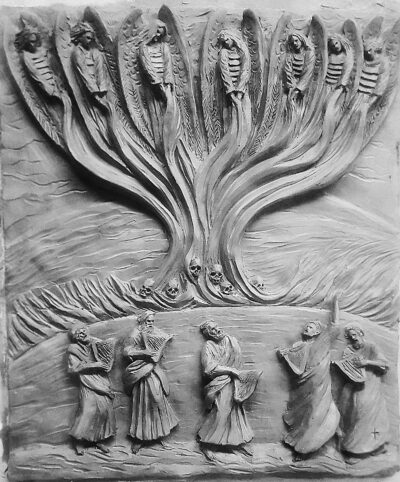
In Chapter 15 of Revelation, John witnesses a scene in heaven where he sees seven angels with seven plagues, the last ones that will complete God’s wrath. Before these plagues are unleashed, John sees a sea of glass mingled with fire, and those who have conquered the beast and his image standing beside it. They sing the song of Moses and the song of the Lamb, praising God for His marvelous works and righteous judgments. The sanctuary in heaven is then filled with smoke from the glory of God, and no one can enter until the seven plagues are complete.
REV15:1-2
Then I saw another portent in heaven, great and amazing: seven angels with seven plagues, which are the last, for with them the wrath of God is ended.
And I saw what appeared to be a sea of glass mixed with fire and those who had conquered the beast and its image and the number of its name standing beside the sea of glass with harps of God in their hands.
Chapter 16
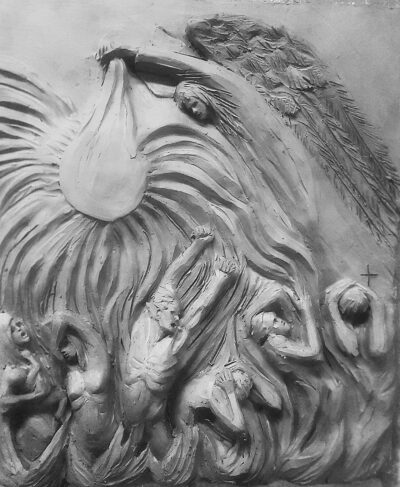
In Chapter 16 of Revelation, the seven angels with the seven bowls of God’s wrath are introduced. The first angel pours out his bowl on the earth, causing malignant sores to afflict those who bear the mark of the beast. The second angel pours his bowl into the sea, turning it into blood and causing the death of every living creature in the sea. The third angel pours his bowl into the rivers and springs, turning them into blood, highlighting the severe consequences of aligning with the forces opposed to God. The fourth angel pours his bowl on the sun, scorching people with intense heat, yet they do not repent but blaspheme God. The fifth angel pours his bowl on the throne of the beast, plunging the kingdom into darkness, resulting in agony and further defiance against God. The sixth angel pours his bowl on the Euphrates River, drying it up to prepare the way for the kings from the east. Three unclean spirits, like frogs, come from the dragon, beast, and false prophet, working miracles to gather the kings for the battle of Armageddon.
The seventh angel pours his bowl into the air, proclaiming, “It is done,” leading to severe convulsions in the earth, unprecedented hailstones, and universal devastation. Despite the intensity of these judgments, people continue to blaspheme God, refusing to repent.
REV 16:8-9
The fourth angel poured his bowl on the sun, and it was allowed to scorch people with fire; they were scorched by the fierce heat, but they cursed the name of God, who had authority over these plagues, and they did not repent and give him glory.
Chapter 17

In Chapter 17 of Revelation, John is shown a vision of a great prostitute sitting on a scarlet beast with seven heads and ten horns. The woman is arrayed in luxurious attire, holding a golden cup filled with abominations. The beast she rides represents a powerful political system, marked by various alliances and manipulations. The woman is revealed as the city of Babylon, symbolic of a corrupt and seductive world system.
The chapter describes the beast’s alliance with ten kings who receive authority for a short time, aligning with the prostitute’s immoral influence. However, these kings eventually turn against the woman, leading to her destruction. The angel informs John that the waters symbolize peoples, multitudes, nations, and languages, emphasizing the global impact of the prostitute’s influence.
REV17:3-6
So he carried me away in the spirit into a wilderness, and I saw a woman sitting on a scarlet beast that was full of blasphemous names, and it had seven heads and ten horns. The woman was clothed in purple and scarlet and adorned with gold and jewels and pearls, holding in her hand a golden cup full of abominations and the impurities of her prostitution, and on her forehead was written a name, a mystery: “Babylon the great, mother of whores and of earth’s abominations.” And I saw that the woman was drunk with the blood of the saints and the blood of the witnesses to Jesus.
Chapter 18
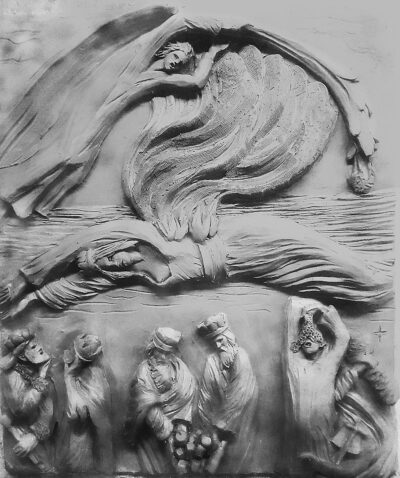
In Chapter 18 of Revelation, an angel descends from heaven, announcing the fall of Babylon the Great, symbolizing the judgment on a corrupt and immoral world system. The description of Babylon’s fall, depicted as a burning women, includes the loss of economic prosperity, which prompts merchants, shipmasters, and seafarers to mourn her destruction. The kings of the earth, who had committed acts of immorality with Babylon, also lament her demise. The angel emphasizes that Babylon’s judgment is a divine response to her sins and wickedness. The call for God’s people to come out of her, so as not to share in her sins and plagues, underscores the need for spiritual separation from the corrupt values of the world.
REV 18 9-10
And the kings of the earth, who engaged in sexual immorality[e] and lived in luxury with her, will weep and wail over her when they see the smoke of her burning; they will stand far off, in fear of her torment, and say,
“Alas, alas, the great city,
Babylon, the mighty city!
For in one hour your judgment has come.”
Chapter 19
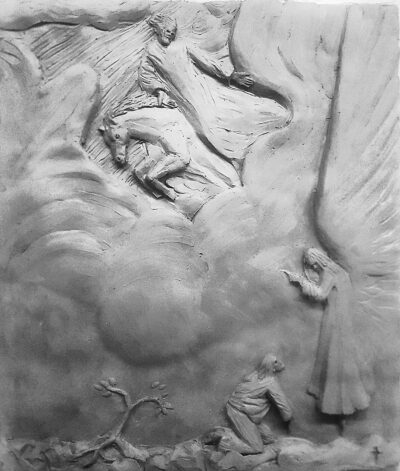
In Chapter 19 of Revelation, the scene shifts to the heavenly realms where a great multitude praises God for the judgment on Babylon, declaring “Hallelujah” and acknowledging the reign of the Lord. The twenty-four elders and four living creatures join in the worship, emphasizing the righteousness and justice of God’s judgments. A voice calls for praise because the marriage of the Lamb has come, symbolizing the union of Christ with His redeemed followers. The bride, clothed in fine linen, clean and bright, represents the collective body of believers prepared for the marriage feast.
A heavenly army, dressed in white linen and riding white horses, follows Christ as He comes in victorious triumph over the forces of evil. The sword from His mouth signifies the authoritative word of God, and He is declared King of kings and Lord of lords. The beast and the false prophet are captured and thrown into the lake of fire. The chapter concludes with the enemies of God being slain, and the birds feasting on their flesh, depicting the decisive and ultimate victory of God’s kingdom.
REV19:10-13 Then I fell down at his feet to worship him, but he said to me, “You must not do that! I am a fellow servant with you and your brothers and sisters who hold the testimony of Jesus. Worship God! For the testimony of Jesus is the spirit of prophecy.”
Then I saw heaven opened, and there was a white horse! Its rider is called Faithful and True, and in righteousness he judges and wages war. His eyes are like a flame of fire, and on his head are many diadems, and he has a name inscribed that no one knows but himself. He is clothed in a robe dipped in blood, and his name is called The Word of God.
Chapter 20
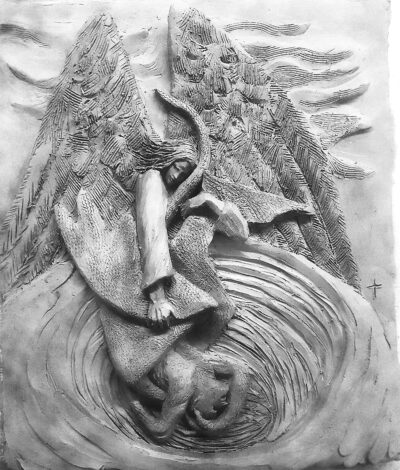
In Chapter 20 of Revelation, John sees an angel coming down from heaven, holding the key to the bottomless pit and a great chain. The angel seizes the dragon, identified as the ancient serpent, who is Satan, and binds him for a thousand years. During this period, Satan is thrown into the abyss, and a seal is placed on him to prevent him from deceiving the nations. John describes the souls of those who were beheaded for their testimony to Jesus and for not worshiping the beast; they come to life and reign with Christ for a thousand years, participating in the first resurrection.
This period is commonly referred to as the millennium, and those who share in the first resurrection are considered blessed and holy. After the thousand years, Satan is released and deceives the nations once again, gathering them for battle against the saints. However, fire comes down from heaven and consumes them. Satan is then cast into the lake of fire, where the beast and the false prophet had previously been thrown. The chapter concludes with a depiction of the great white throne judgment, where the dead are judged according to their deeds recorded in the Book of Life. Those whose names are not found written in the Book of Life are cast into the lake of fire.
REV 20:1-3 Then I saw an angel coming down from heaven, holding in his hand the key to the bottomless pit and a great chain. He seized the dragon, that ancient serpent, who is the devil and Satan, and bound him for a thousand years and threw him into the pit and locked and sealed it over him, so that he would deceive the nations no more, until the thousand years were ended.
Chapter 21
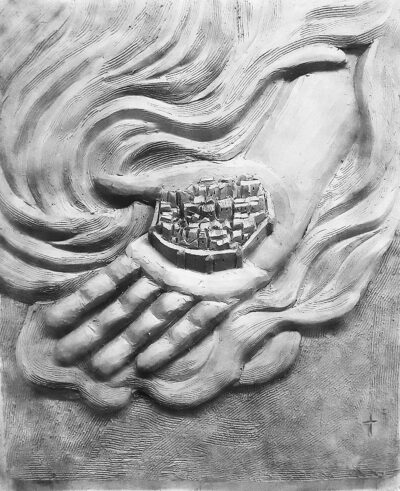
In Chapter 21 of Revelation, John describes a vision of a new heaven and a new earth. He sees the holy city, the new Jerusalem, descending from heaven, adorned as a bride for her husband. The voice from the throne announces that God will dwell with His people, wiping away every tear and eradicating sorrow, death, and pain.
The city is described as having foundations adorned with precious stones, twelve gates named after the twelve tribes of Israel, and streets of pure gold. The glory of God illuminates the city, and there is no need for the sun or moon. The river of the water of life flows from the throne of God, and the tree of life bears twelve kinds of fruit, providing healing for the nations. God’s people will see His face, and His name will be on their foreheads. There will be no more night, and they will reign forever with God.
REV21:9-11
Then one of the seven angels who had the seven bowls full of the seven last plagues came and said to me, “Come, I will show you the bride, the wife of the Lamb.” And in the spirit he carried me away to a great, high mountain and showed me the holy city Jerusalem coming down out of heaven from God. It has the glory of God and a radiance like a very rare jewel, like jasper, clear as crystal.
Chapter 22
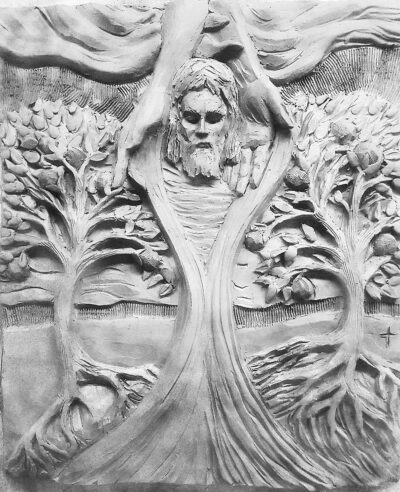
In Chapter 22 of Revelation, John continues his vision of the new Jerusalem and the river of the water of life, which flows from the throne of God and the Lamb. The tree of life, bearing twelve kinds of fruit, yields its fruit every month, and its leaves provide healing for the nations. The throne of God and the Lamb will be in the city, and God’s servants will worship Him face to face.
The Lord declares, “Behold, I am coming soon,” emphasizing the imminent return of Christ. Blessed are those who keep the words of the prophecy, as expressed in the Book of Revelation. John is told not to seal up the words of the prophecy, as the time is near. The angel reassures John of the reliability of the vision, proclaiming the truthfulness of the words given by God. Jesus identifies Himself as the Alpha and the Omega, the First and the Last, and declares His reward for those who wash their robes in His blood, granting them access to the tree of life.
The Spirit and the bride say, “Come!” and those who hear are invited to come and partake of the water of life freely. A stern warning is issued against adding to or taking away from the words of the prophecy, emphasizing the seriousness of preserving the integrity of God’s revelation. The chapter concludes with a final affirmation of Christ’s imminent return and a prayer for His grace to be with His people.
REV22 1-2
Then the angel showed me the river of the water of life, bright as crystal, flowing from the throne of God and of the Lamb through the middle of the street of the city. On either side of the river is the tree of life with its twelve kinds of fruit, producing its fruit each month, and the leaves of the tree are for the healing of the nations.